
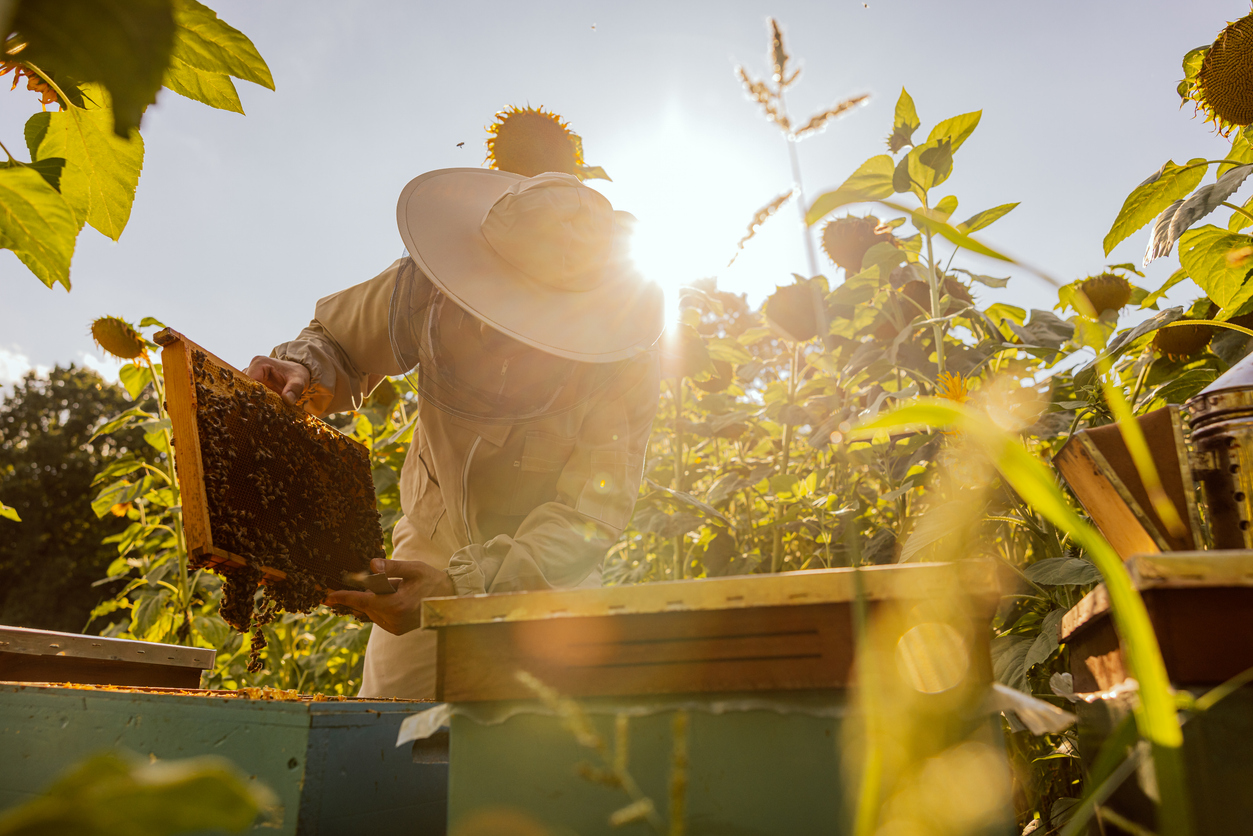
Fighting The Tiny Parasite That Can Threaten an Entire Hive
Keeping honey bees healthy means managing a number of pests and diseases, but few are as persistent or damaging as Varroa mites. Beekeepers have several treatment options available, including oxalic acid, but traditional application methods such as dribbling and vaporization can require repeated treatments, specialized equipment, and careful timing. Extended-release methods offer another approach, by delivering oxalic acid gradually over a longer period. And surprisingly, one of the materials being used for these applications is a familiar household product: the Swedish dishcloth.
What Are Varroa Mites?
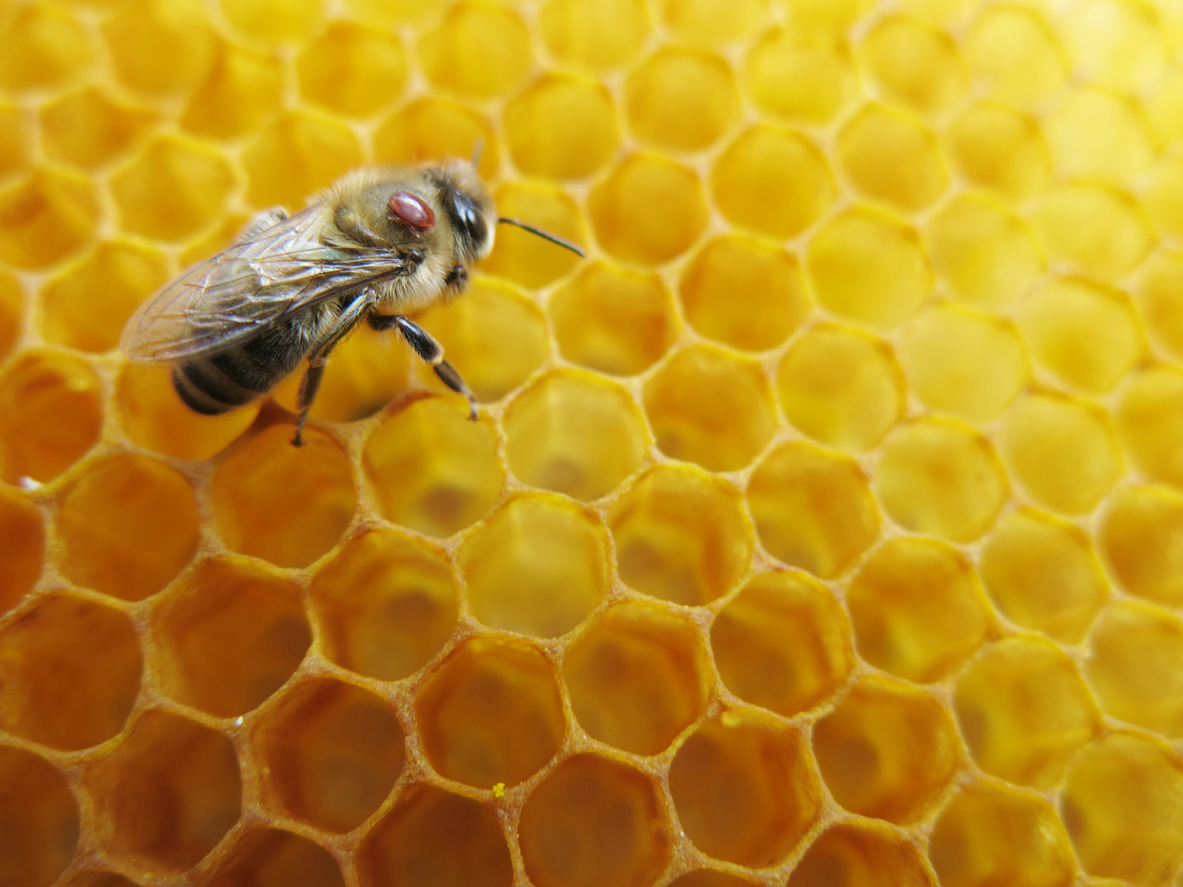
Varroa mites are tiny external parasites that live on honey bees and reproduce inside developing bee broods. They feed on the body fat tissue of bees and can weaken both individual bees and entire colonies. Even more concerning, Varroa mites can transmit and amplify numerous viruses, making an infestation much more than simply a nuisance. High mite levels can contribute to weakened colonies, poor winter survival, and ultimately colony loss.
Managing Varroa mites can be challenging because much of the mite population is hidden inside capped brood, where many treatments cannot reach them. Mite populations can also increase quickly, and treatments need to be used carefully to avoid harming the bees or contaminating hive products. For these reasons, beekeepers use a combination of monitoring and different treatment methods throughout the year. Finding effective ways to control mites while minimizing stress on the colony remains an important part of modern beekeeping.
Traditional Treatment Methods for Varroa Mites
Oxalic acid is one of the commonly used tools for managing Varroa mites, but the way it is delivered can make a significant difference. Two traditional application methods are dribbling and vaporization, also called sublimation. Both can be effective, particularly when a colony has little or no capped brood, but each method has limitations that beekeepers need to consider. Oxalic acid primarily affects mites on adult bees, so mites protected inside capped brood are not reached by these applications. This can make timing especially important when a colony is actively raising brood.
Oxalic Acid Dribble
With the dribble method, a measured oxalic acid solution is applied directly to the bees. It is relatively simple and does not require specialized vaporization equipment, but the treatment is essentially a single application rather than a method that provides extended exposure. Because it does not reach mites inside capped brood, its effectiveness can be limited when substantial brood is present. Repeated applications may also be necessary in some treatment strategies, depending on the colony’s brood cycle and mite levels.
Oxalic Acid Vaporization
Vaporization, or sublimation, uses specialized equipment to heat oxalic acid and introduce it into the hive. Like dribbling, it is particularly effective against mites on adult bees but does not reach mites protected inside capped brood. It also requires appropriate protective equipment and careful handling because oxalic acid vapor can be hazardous to the beekeeper. For colonies with substantial brood, research indicates that multiple applications may be needed because newly emerging mites are not exposed during the initial treatment.
Could Oxalic Acid Be Released Over a Longer Period?
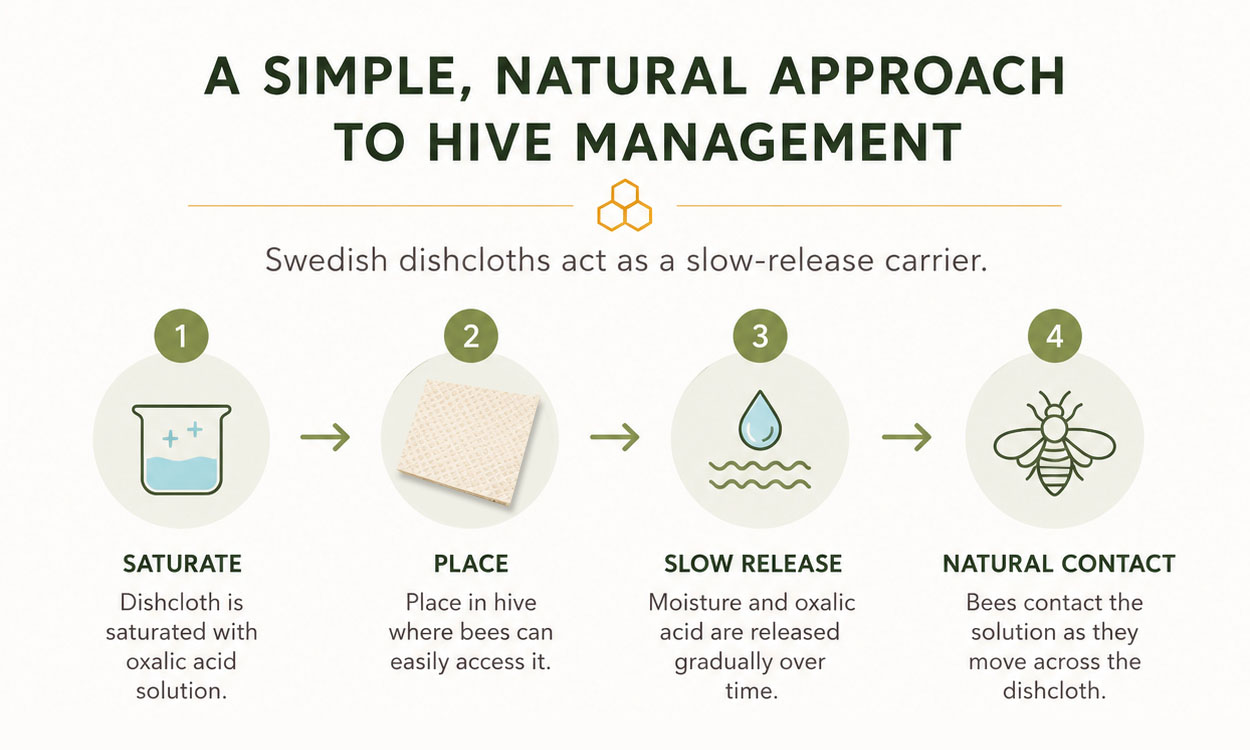
These limitations have led beekeepers and researchers to explore ways of making oxalic acid available to the colony over a longer period rather than delivering it all at once. The basic idea is simple: instead of a single dribble or vaporization treatment, an absorbent material can hold oxalic acid and glycerin and gradually make it available as the bees come into contact with the material.
Research by Randy Oliver of Scientific Beekeeping has explored a variety of delivery matrices for extended-release oxalic acid. His field research has included biodegradable cellulose Swedish sponges, which he found to be a promising delivery matrix. This approach has helped bring an unexpected household product into the conversation around Varroa management: the humble Swedish dishcloth.
Using Swedish Dishcloths for a slow release treatment for varroa mites
The unique absorbency of Swedish dishcloths makes them useful as a delivery matrix for extended-release oxalic acid treatments. Made from a combination of cotton and cellulose, these cloths can absorb and hold an oxalic acid and glycerin solution, gradually releasing it over an extended period rather than delivering the treatment all at once.
Oxalic acid works primarily by coming into contact with Varroa mites while they are riding on adult bees. As bees move throughout the hive and across the treated material, small amounts of the oxalic acid solution are transferred to their bodies. The bees then spread the material through normal movement and grooming, allowing the treatment to reach mites attached to the bees. Research has demonstrated that direct contact with oxalic acid can significantly reduce Varroa mite viability.
The extended-release approach is particularly useful because Varroa mites spend part of their life cycle reproducing inside capped brood cells, where they are largely protected from many treatments. When new adult bees emerge, the mites leave the cells and attach to adult bees. A slow-release oxalic acid treatment can continue exposing these newly emerged, phoretic mites over a period of weeks, rather than relying on a single application at one point in time.
This makes extended-release oxalic acid more than simply a preventative measure. It is intended as a mite-management treatment for colonies with Varroa pressure, helping reduce the population of mites on adult bees while continually addressing mites emerging from the reproductive stage in capped brood. It is not a substitute for monitoring mite levels, and treatment effectiveness can vary with conditions such as moisture and the formulation used.
Why are Swedish Dishcloths a smart choice for bee hives?
Swedish dishcloths provide a lightweight, biodegradable and highly absorbent way to hold and gradually deliver the treatment. Their cellulose structure acts as a reservoir, while the glycerin helps retain moisture and keeps the oxalic acid available for transfer as bees contact the material. This slow, sustained delivery is what makes the Swedish dishcloth an interesting alternative to methods that deliver oxalic acid in a single application.
Swedish Dishcloths offer a number of other advantages as well:
- Safe for bees
- Biodegradable
- Plastic-free
- Easy to cut to size
- Lightweight
- Available in economical bulk quantities
Unlike synthetic materials, cellulose naturally breaks down over time, making it an attractive option for beekeepers who prefer biodegradable materials around their apiaries.
 A Technique Discussed by the Beekeeping Community
 A Technique Discussed by the Beekeeping Community
One of the most respected voices in modern beekeeping, Randy Oliver of Scientific Beekeeping, has published extensive research on extended-release oxalic acid methods.
In his article, “Extended-release oxalic acid for varroa management,” Randy Oliver discusses his research comparing different biodegradable delivery matrices. He notes that cellulose Swedish sponges have performed well in his field work and explains why he prefers biodegradable cellulose materials over plastic-based alternatives.
If you’d like to read his complete research, including preparation methods, application techniques, and current regulatory discussion, we encourage reading his original article on Scientific Beekeeping.
Why Our Customers Choose Our Undyed Swedish Dishcloths
Although our Swedish dishcloths were originally designed for household cleaning, many beekeepers have told us they value several features:
- Undyed
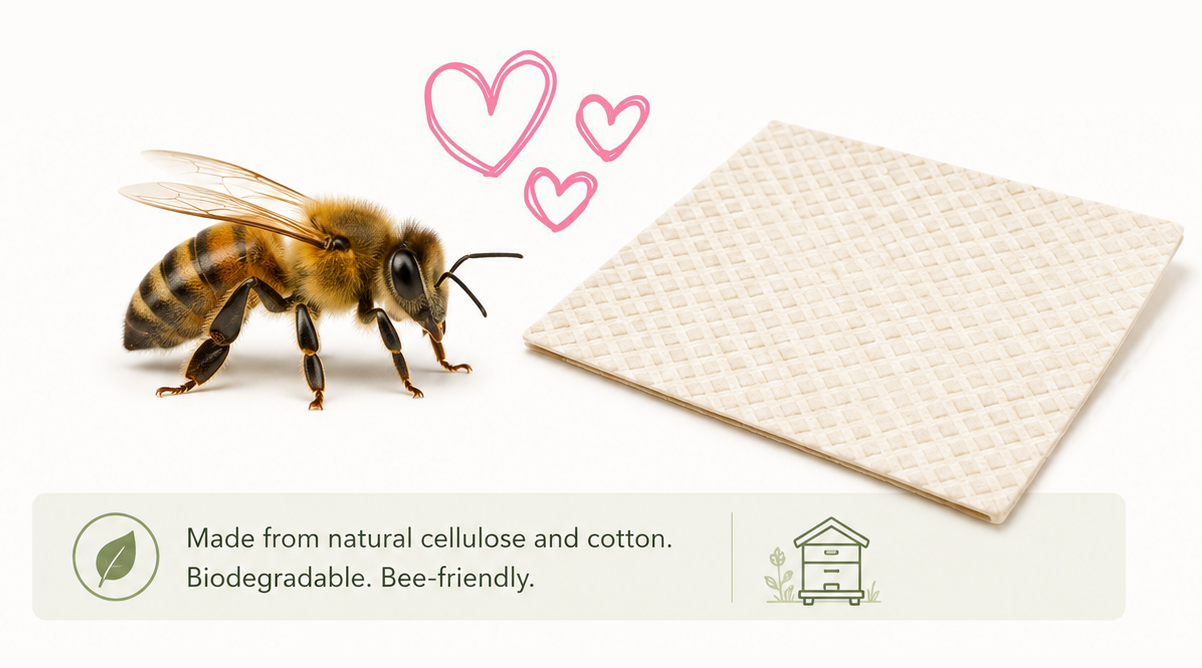
- Made from natural cellulose and cotton
- Highly absorbent
- Durable
- Bulk quantities available
- Affordable pricing for hobbyists and commercial apiaries
Because we offer bulk packs, our products have become a practical option for customers managing multiple colonies.
A Note About Hive Management
Every beekeeper should follow applicable federal, state, and local regulations regarding hive management practices and always follow the label directions for any registered products they choose to use.
Our Swedish dishcloths are sold as general-purpose absorbent cellulose cloths. We do not manufacture or sell pesticide products, and we encourage beekeepers to consult trusted educational resources and current regulations when making hive management decisions.
Looking for Bulk Undyed Swedish Dishcloths?
Whether you’re managing a few backyard hives or hundreds of colonies, we offer bulk quantities of our undyed Swedish dishcloths at competitive prices.
If you’re a beekeeper who has found other creative uses for our Swedish dishcloths, we’d love to hear from you. Customer feedback often helps us discover new ways people are using our products.