
Posted on

Why Beekeepers Are Using Swedish Dishcloths for Hive Management

Worker in beekeeper suit taking frame full of bees and honeycomb from beehive to treat for verroa mites with swedish dishcloths and oxalic acid.

Fighting The Tiny Parasite That Can Threaten an Entire Hive

Keeping honey bees healthy means managing a number of pests and diseases, but few are as persistent or damaging as Varroa mites. Beekeepers have several treatment options available, including oxalic acid, but traditional application methods such as dribbling and vaporization can require repeated treatments, specialized equipment, and careful timing. Extended-release methods offer another approach, by delivering oxalic acid gradually over a longer period. And surprisingly, one of the materials being used for these applications is a familiar household product: the Swedish dishcloth.

What Are Varroa Mites?

Varroa mites are tiny external parasites that live on honey bees and reproduce inside developing bee broods. They feed on the body fat tissue of bees and can weaken both individual bees and entire colonies. Even more concerning, Varroa mites can transmit and amplify numerous viruses, making an infestation much more than simply a nuisance. High mite levels can contribute to weakened colonies, poor winter survival, and ultimately colony loss.

Managing Varroa mites can be challenging because much of the mite population is hidden inside capped brood, where many treatments cannot reach them. Mite populations can also increase quickly, and treatments need to be used carefully to avoid harming the bees or contaminating hive products. For these reasons, beekeepers use a combination of monitoring and different treatment methods throughout the year. Finding effective ways to control mites while minimizing stress on the colony remains an important part of modern beekeeping.

A single honeybee infested by varroa mites, inside of a beehive. The mites can quickly take over the entire hive and cause colony collapse without treatment.
One of the biggest problems to honeybee population is the varroa mite. These little mites kill thousands of hives every year by weakening individual bees during the winter

Traditional Treatment Methods for Varroa Mites

Oxalic acid is one of the commonly used tools for managing Varroa mites, but the way it is delivered can make a significant difference. Two traditional application methods are dribbling and vaporization, also called sublimation. Both can be effective, particularly when a colony has little or no capped brood, but each method has limitations that beekeepers need to consider. Oxalic acid primarily affects mites on adult bees, so mites protected inside capped brood are not reached by these applications. This can make timing especially important when a colony is actively raising brood.

Oxalic Acid Dribble

With the dribble method, a measured oxalic acid solution is applied directly to the bees. It is relatively simple and does not require specialized vaporization equipment, but the treatment is essentially a single application rather than a method that provides extended exposure. Because it does not reach mites inside capped brood, its effectiveness can be limited when substantial brood is present. Repeated applications may also be necessary in some treatment strategies, depending on the colony’s brood cycle and mite levels.

Oxalic Acid Vaporization

Vaporization, or sublimation, uses specialized equipment to heat oxalic acid and introduce it into the hive. Like dribbling, it is particularly effective against mites on adult bees but does not reach mites protected inside capped brood. It also requires appropriate protective equipment and careful handling because oxalic acid vapor can be hazardous to the beekeeper. For colonies with substantial brood, research indicates that multiple applications may be needed because newly emerging mites are not exposed during the initial treatment.

Could Oxalic Acid Be Released Over a Longer Period?

These limitations have led beekeepers and researchers to explore ways of making oxalic acid available to the colony over a longer period rather than delivering it all at once. The basic idea is simple: instead of a single dribble or vaporization treatment, an absorbent material can hold oxalic acid and glycerin and gradually make it available as the bees come into contact with the material.

Research by Randy Oliver of Scientific Beekeeping has explored a variety of delivery matrices for extended-release oxalic acid. His field research has included biodegradable cellulose Swedish sponge cloths, which he found to be a promising delivery matrix. This approach has helped bring an unexpected household product into the conversation around Varroa management: the humble Swedish dishcloth.

Using Swedish Dishcloths for a slow release treatment for varroa mites

The unique absorbency of Swedish dishcloths makes them useful as a delivery matrix for extended-release oxalic acid treatments. Made from a combination of cotton and cellulose, these cloths can absorb and hold an oxalic acid and glycerin solution, gradually releasing it over an extended period rather than delivering the treatment all at once.

Oxalic acid works primarily by coming into contact with Varroa mites while they are riding on adult bees. As bees move throughout the hive and across the treated material, small amounts of the oxalic acid solution are transferred to their bodies. The bees then spread the material through normal movement and grooming, allowing the treatment to reach mites attached to the bees. Research has demonstrated that direct contact with oxalic acid can significantly reduce Varroa mite viability.

The extended-release approach is particularly useful because Varroa mites spend part of their life cycle reproducing inside capped brood cells, where they are largely protected from many treatments. When new adult bees emerge, the mites leave the cells and attach to adult bees. A slow-release oxalic acid treatment can continue exposing these newly emerged, phoretic mites over a period of weeks, rather than relying on a single application at one point in time.

This makes extended-release oxalic acid more than simply a preventative measure. It is intended as a mite-management treatment for colonies with Varroa pressure, helping reduce the population of mites on adult bees while continually addressing mites emerging from the reproductive stage in capped brood. It is not a substitute for monitoring mite levels, and treatment effectiveness can vary with conditions such as moisture and the formulation used.
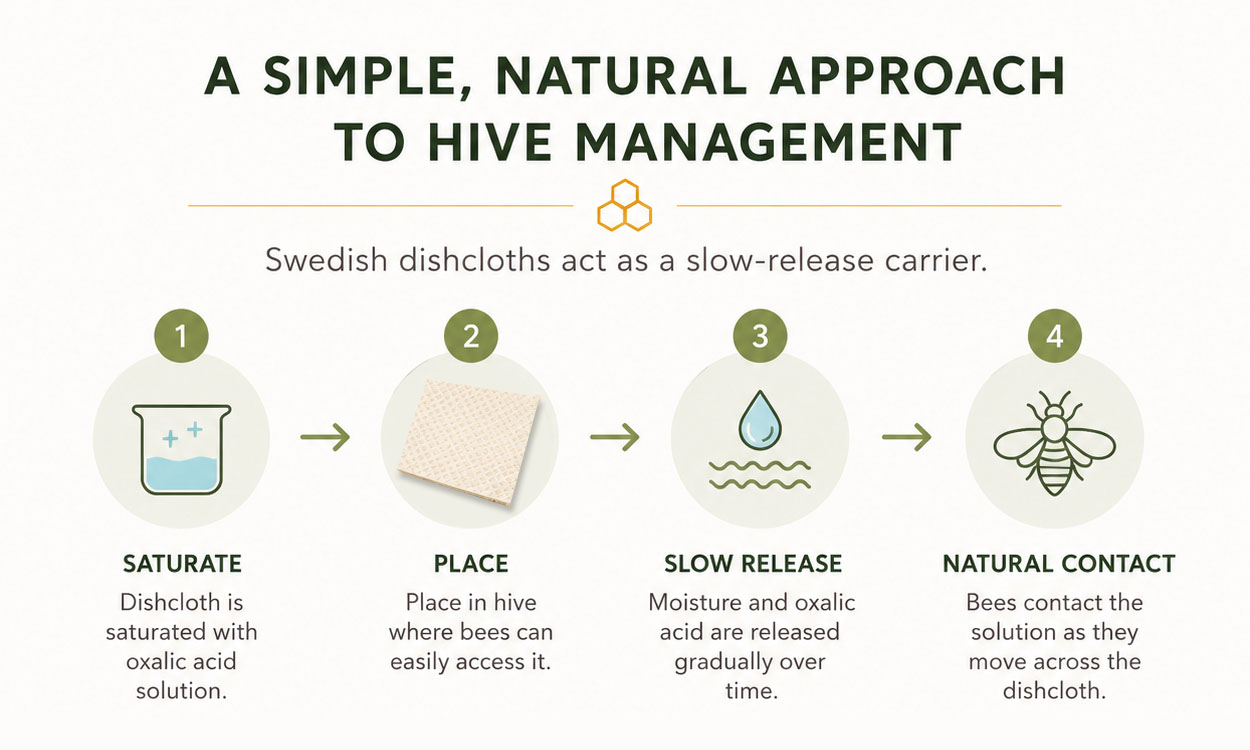
Infographic explaining how to use Swedish Dishcloths with Oxalic Acid to treat bee hives for varroa mites. Saturate the Swedish Dishcloth with a mixture of Oxalic Acid and Glycerin, and place it in the hive where bees can access it. The oxalic acid is gradually released over time and spreads onto the adult bees as they walk across the dishcloth.

Why are Swedish Dishcloths a smart choice for bee hives?

Swedish dishcloths provide a lightweight, biodegradable and highly absorbent way to hold and gradually deliver the treatment. Their cellulose structure acts as a reservoir, while the glycerin helps retain moisture and keeps the oxalic acid available for transfer as bees contact the material. This slow, sustained delivery is what makes the Swedish dishcloth an interesting alternative to methods that deliver oxalic acid in a single application.

Swedish Dishcloths offer a number of other advantages as well:

  • Safe for bees
  • Biodegradable
  • Plastic-free
  • Easy to cut to size
  • Lightweight
  • Available in economical bulk quantities

Unlike synthetic materials, cellulose naturally breaks down over time, making it an attractive option for beekeepers who prefer biodegradable materials around their apiaries.

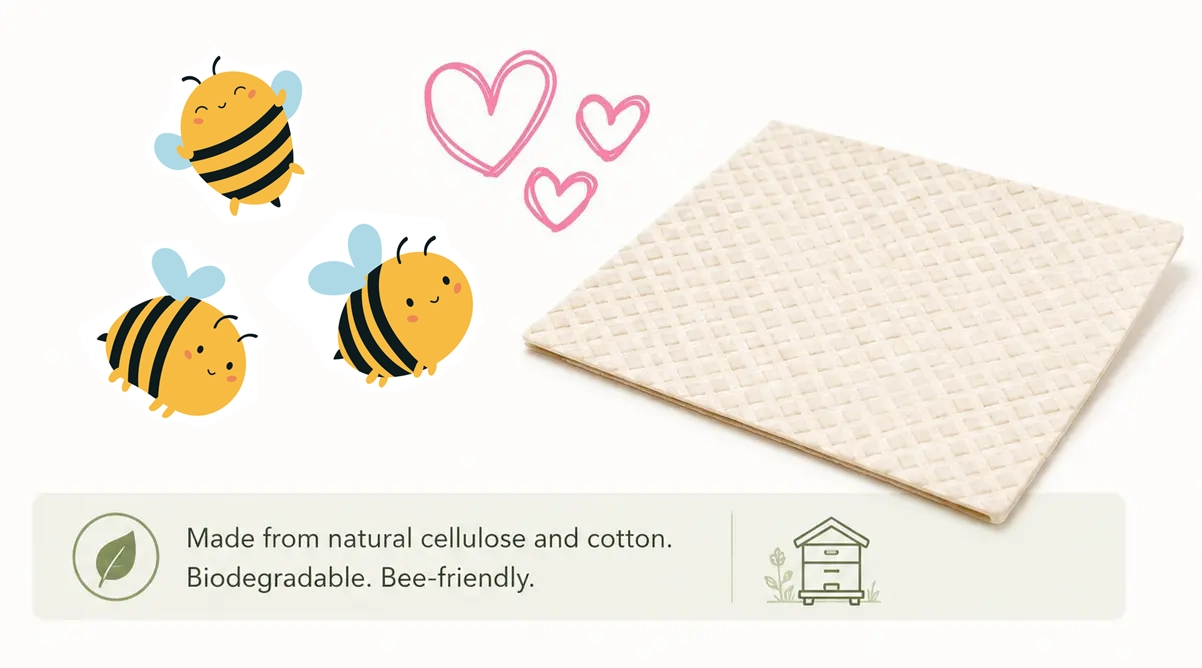
A group of bees next to a Swedish dishcloth with little hearts around it. The image is captioned "Made from natural cellulose and cotton. Biodegradable. Bee Friendly.A Technique Discussed by the Beekeeping Community
One of the most respected voices in modern beekeeping, Randy Oliver of Scientific Beekeeping, has published extensive research on extended-release oxalic acid methods.

In his article, “Extended-release oxalic acid for varroa management,” Randy Oliver discusses his research comparing different biodegradable delivery matrices. He notes that cellulose Swedish sponge cloths have performed well in his field work and explains why he prefers biodegradable cellulose materials over plastic-based alternatives.

If you’d like to read his complete research, including preparation methods, application techniques, and current regulatory discussion, we encourage reading his original article on Scientific Beekeeping.

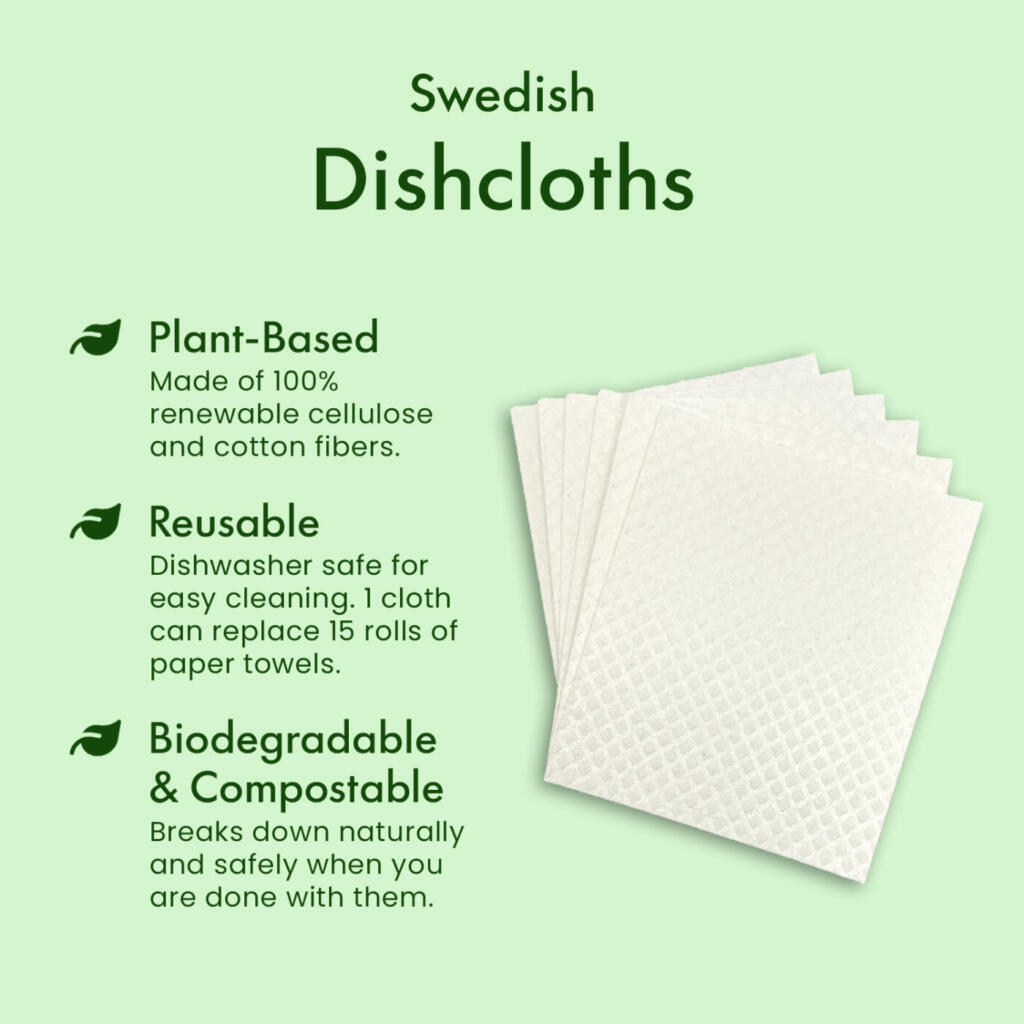
Infographic explaining how our Swedish Dishcloths are Plant Based - Made of 100% renewable cellulose and cotton fibers. They are also Reusable, and dishwasher safe for easy cleaning. 1 cloth can replace 15 rolls of paper towels. They are also biodegradable and compostable. They break down naturally and safely when you are done with them.
Why Our Customers Choose Our Undyed Swedish Dishcloths
Although our Swedish dishcloths were originally designed for household cleaning, many beekeepers have told us they value several features:

    • Undyed
    • Made from natural cellulose and cotton
    • Highly absorbent
    • Durable
    • Bulk quantities available
  • Affordable pricing for hobbyists and commercial apiaries

Because we offer bulk packs, our products have become a practical option for customers managing multiple colonies.

A Note About Hive Management

Every beekeeper should follow applicable federal, state, and local regulations regarding hive management practices and always follow the label directions for any registered products they choose to use.

Our Swedish dishcloths are sold as general-purpose absorbent cellulose cloths. We do not manufacture or sell pesticide products, and we encourage beekeepers to consult trusted educational resources and current regulations when making hive management decisions.

Looking for Bulk Undyed Swedish Dishcloths?

Whether you’re managing a few backyard hives or hundreds of colonies, we offer bulk quantities of our undyed Swedish dishcloths at competitive prices.
Shop Now

If you’re a beekeeper who has found other creative uses for our Swedish dishcloths, we’d love to hear from you. Customer feedback often helps us discover new ways people are using our products.
 

A graphic showing a stack of Swedish sponge cloths. It reads "Pack sizes ranging from 12 to 288, for as little as $0.45 each. Pallet quantities available for even less. Call 877-776-6430 for pricing.

Posted on

How Vacation Rental Hosts Can Keep Their Properties Looking Guest Ready

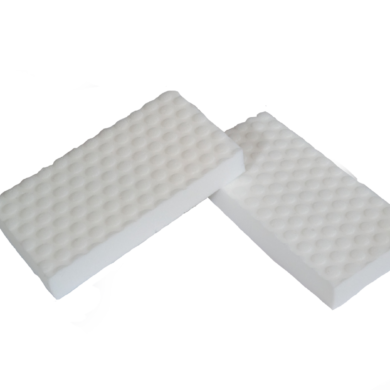
Lg Extra Strength Compressed Eraser Sponges (36pk)

First impressions matter in the vacation rental business. Guests expect to walk into a space that feels fresh, clean, and ready for their stay. While fresh linens and sparkling bathrooms are essential, small details like scuffed walls, fingerprints on doors, or stained countertops can quickly take away from the overall experience. A consistent cleaning routine and the right supplies can help vacation rental hosts keep their properties looking their best between every booking.

Start with a Room-by-Room Inspection

Before cleaning begins, take a few minutes to walk through the property as if you were a guest arriving for the first time. Look for marks on walls, dusty shelves, smudged windows, and worn areas that may need extra attention. Catching these issues early makes it easier to maintain the property’s appearance and prevent small problems from becoming larger ones.

Tackle Scuffs and Everyday Marks

Vacation rentals naturally experience a lot of foot traffic. Luggage, shoes, and everyday use often leave behind scuffs on walls, doors, and baseboards. A quality melamine sponge is an effective way to remove many of these marks from hard surfaces with only water, helping restore a clean appearance without relying on strong cleaning chemicals.

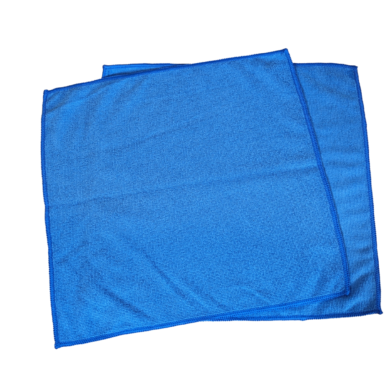
For other surfaces, microfiber cloths are excellent for removing dust, fingerprints, and light dirt while leaving behind a streak-free finish.

Pay Attention to High-Touch Surfaces

Guests interact with many surfaces throughout their stay, including light switches, cabinet handles, appliance doors, faucets, and remote controls. These spots can collect fingerprints, grease, and germs quickly. Cleaning and disinfecting these areas after every checkout helps create a cleaner, more welcoming environment for incoming guests.

Keep Supplies Organized

Fast turnovers become much easier when cleaning products are always within reach. Keeping a well-stocked cleaning caddy with melamine sponges, microfiber cloths, non-scratch scrub pads, and other essential supplies allows hosts or cleaning crews to move efficiently from one room to the next. Buying frequently used products in bulk can also help reduce costs while ensuring supplies are always available.

Consistency Makes the Difference

Guests remember properties that feel clean and well maintained. Developing a consistent checklist for every turnover helps ensure nothing gets overlooked, from removing wall marks to polishing mirrors and wiping down furniture.

When vacation rental owners invest time in regular upkeep and use dependable cleaning products, they create a welcoming space that encourages positive reviews, repeat bookings, and recommendations. A little attention to detail after each stay helps protect the property while giving every new guest the great first impression they expect. Contact Sponge Outlet at 877-776-6430 today or visit us online for more information!

Posted on

Why Maintenance Teams Keep Melamine Sponges on Their Cleaning Carts

Closeup of a large boat eraser with reinforced core for heavy duty cleaning.

When it comes to facility maintenance, appearances matter. Clean walls, spotless common areas, and well-maintained public spaces help create a positive experience for employees, tenants, customers, and visitors. Maintenance professionals are constantly looking for tools that help them work efficiently while delivering great results. One item that has earned a permanent spot on many cleaning carts is the melamine sponge.

Known for its ability to remove stubborn marks and stains with just water, a melamine sponge can help maintenance teams handle a variety of cleaning challenges throughout the day.

Removing Scuffs from Walls and Doors

High-traffic buildings are full of opportunities for scuff marks to appear. Shoes, carts, luggage, and furniture can all leave marks on walls, doors, and baseboards. These blemishes can make an otherwise clean facility look neglected.

Melamine sponges are often used to quickly remove these marks without requiring multiple cleaning products. A few passes with a damp sponge can often restore surfaces and help maintain a professional appearance.

Cleaning Elevator Interiors

Elevators are one of the most frequently used spaces in office buildings, hotels, apartment complexes, and healthcare facilities. Because so many people use them every day, fingerprints, smudges, and shoe marks can build up quickly.

Maintenance teams often use melamine sponges for spot cleaning elevator walls, doors, and other hard surfaces. Regular touch-ups can help elevators stay presentable and leave a better impression on visitors.

Keeping Break Rooms Presentable

Employee break rooms are another area that requires constant attention. Countertops, appliances, tables, and cabinets can accumulate stains, residue, and marks from daily use.

Melamine sponges offer a convenient solution for tackling many of these messes. Since maintenance staff can carry them easily on a cleaning cart, they are always available when a quick cleanup is needed.

Improving the Look of Public Spaces

Lobbies, waiting areas, hallways, and restrooms often receive the most scrutiny from visitors. Even small marks or stains can affect how people perceive the cleanliness of a facility.

By keeping melamine sponges nearby, maintenance teams can address problems as they arise rather than waiting for scheduled deep cleaning. This helps facilities maintain a cleaner appearance throughout the day.

A Reliable Tool for Everyday Maintenance

Facility managers appreciate tools that are simple, effective, and versatile. Melamine sponges fit all three categories. They can be used in a wide range of settings and help maintenance professionals remove marks and stains quickly.

That combination of convenience and performance is why so many maintenance teams keep melamine sponges on their cleaning carts. They are practical tools that help buildings look their best day after day. Contact Sponge Outlet at 877-776-6430 today or visit us online for more information!Top of Form

Bottom of Form


Posted on

Cleaning High Touch Surfaces More Effectively in Commercial Spaces

maid cleaning hotel bathroom

Walk into any office, hotel, or public building and you will immediately notice the areas that get the most use. Doorways, counters, walls near hallways, and shared fixtures all tell a story. These high-touch surfaces take on the wear of daily traffic, and if they are not cleaned properly, the entire space can start to feel neglected.

Keeping these areas clean is not just about appearance. It is about maintaining a professional environment while working efficiently behind the scenes.

Understanding Where Wear Happens Most

High-touch surfaces go far beyond the obvious. While door handles and light switches are cleaned frequently, other areas often get overlooked even though they see just as much contact.

Walls along corridors pick up scuffs from bags and equipment. Door frames collect fingerprints and grime. Elevator panels, reception counters, and restroom partitions all deal with constant use. In hotels, luggage and carts can leave marks throughout guest hallways. In offices, shared workspaces and breakrooms quickly show signs of buildup.

These surfaces need regular attention, but they also need the right approach to avoid wasting time.

Why Some Cleaning Methods Fall Short

A lot of cleaning routines rely on the same basic tools. Spray cleaners and cloths are commonly used across nearly every surface. While they can handle light dirt, they often struggle with tougher marks.

Scuffs on painted walls, streaks on doors, and residue on fixtures can require multiple passes to remove. This slows down cleaning teams and leads to inconsistent results. Some areas may look spotless while others still show visible wear.

There is also the risk of using tools that are too aggressive. Harsh scrubbing pads can damage finishes, especially on painted or coated surfaces. Over time, that kind of wear can lead to more maintenance or even replacement.

A More Efficient Way to Clean

To improve results, cleaning needs to be both effective and simple. The goal is to remove marks quickly without damaging the surface underneath.

Melamine foam, like the Instant Erase sponges from Sponge Outlet, offers a more efficient solution. Instead of relying on chemicals, it works by gently lifting dirt and marks from the surface itself. This makes it especially useful for stubborn scuffs and buildup that traditional methods struggle to remove.

Because it works with minimal effort, it helps cleaning teams move faster while still delivering consistent results.

Focusing on the Areas That Matter Most

Walls and Hallways – Walls in commercial spaces take more contact than most people expect. In busy environments, even a single day can leave visible marks along high-traffic paths.

Using a melamine sponge allows crews to spot clean these areas quickly without needing to repaint or apply heavy cleaning solutions. This keeps walls looking fresh with less effort.

Doors and Entry Points – Doors and entryways are touched constantly throughout the day. Handles, push bars, and surrounding surfaces collect oils, dirt, and fingerprints.

A quick wipe with the right tool can restore a clean appearance in seconds. This is especially important in areas where first impressions matter, such as office entrances or hotel lobbies.

Restrooms and Fixtures – Restrooms require frequent cleaning, and high-touch surfaces in these spaces need to be handled efficiently. Partitions, sinks, and counters all collect buildup that can be difficult to remove with standard methods.

Melamine foam helps cut through that buildup without damaging surfaces, making it easier to maintain a clean and polished look even during busy periods.

Shared Workspaces – In office settings, desks, counters, and shared equipment see constant use. Marks from everyday activity can build up quickly, especially in common areas.

Pairing melamine foam with microfiber cloths allows cleaning teams to remove stubborn spots and then finish with a smooth, streak-free wipe.

Creating a Smarter Cleaning Routine

Improving cleaning results does not require a complete overhaul. Small adjustments can make a big difference.

Start by identifying the areas that receive the most contact. These should be prioritized in daily routines. Instead of treating all surfaces the same, match the right tool to the task.

Providing staff with high-quality materials also makes a difference. When tools are more effective, less time is spent repeating the same steps. This improves both speed and consistency.

Training is another key factor. When teams understand how to handle different surfaces properly, they can work more confidently and avoid unnecessary damage.

Saving Time and Reducing Costs

Efficiency in cleaning is not just about speed. It also impacts long-term costs. When surfaces are cleaned properly the first time, there is less need for repeat work or repairs.

Bulk purchasing options from Sponge Outlet make it easier for businesses to maintain a steady supply of professional-grade products without overspending. Lower cost per unit combined with better performance helps reduce both material and labor expenses.

Over time, these savings become significant, especially in large commercial spaces.

Making a Stronger Impression

Clean high-touch surfaces play a major role in how a space is perceived. Guests notice when walls are marked or when entryways look worn. Employees notice when shared areas feel neglected.

By focusing on the surfaces that see the most use and using tools that deliver better results, businesses can maintain a higher standard without increasing workload.

A clean environment does more than look good. It creates a sense of care and professionalism that people can feel as soon as they walk through the door. Contact Sponge Outlet at 877-776-6430 today or visit us online for more information!

Posted on

Combining Microfiber Cloths and Eraser Sponges for Better Results in Car Detailing

using microfiber towels and eraser sponges for auto detailing

Getting great results in car detailing is not just about effort. It comes down to using the right tools in the right way. Two of the most useful tools for interior detailing are microfiber cloths and eraser sponges. Each one serves a different purpose, but when you use them together, the results are cleaner, faster, and more consistent.

Whether you are a professional detailer or someone who enjoys keeping your vehicle in top shape, learning how these two tools work together can make a noticeable difference.

Why These Two Tools Work So Well Together

Microfiber cloths are known for their ability to trap dust, dirt, and moisture. Their soft fibers make them ideal for delicate surfaces like dashboards, screens, and trim. They are also perfect for wiping and buffing without leaving streaks behind.

Eraser sponges, on the other hand, are designed to tackle tougher problems. Made from melamine foam, they act like a very fine abrasive. This allows them to break down scuffs, stains, and grime that a regular cloth cannot remove on its own.

When you combine the strength of an eraser sponge with the finishing ability of a microfiber cloth, you get a more complete cleaning process that handles both deep cleaning and final detailing.

Starting with the Tough Spots

In most cases, the eraser sponge should be used first. Think of it as your go-to tool for areas that have built-up grime or visible marks.

Lightly dampen the sponge and gently work on the problem area. You do not need to apply much pressure. Let the sponge do the work. This is especially helpful on door panels, plastic trim, and areas around handles where dirt tends to collect.

By removing the stubborn buildup first, you make it easier to clean the rest of the surface properly.

Finishing with Microfiber for a Clean Look

After using an eraser sponge, it is important to follow up with a microfiber cloth. This step clears away any leftover residue and helps restore a smooth, even finish.

A damp microfiber cloth can remove any loosened dirt, while a dry one can be used to buff the surface. This is what gives the interior that clean, professional look.

Skipping this step can leave surfaces looking dull or uneven, so it is an important part of the process.

Where This Combination Works Best

Some areas of a vehicle benefit more than others when using both tools together.

Door panels are a common problem area. Scuff marks from shoes can be difficult to remove with a microfiber cloth alone. An eraser sponge handles the marks, and a microfiber cloth brings back a clean finish.

Cup holders and center consoles often have sticky residue and grime. The sponge breaks it down quickly, and the cloth wipes everything away.

Steering wheels can also build up oils and dirt over time. Careful use of both tools can refresh the surface and improve the overall feel.

Textured plastics are another great example. Dirt tends to settle into small grooves, making it harder to clean. The sponge lifts it out, and the cloth finishes the job.

Knowing Where to Be Careful

Even though this combination is effective, it is not meant for every surface. Eraser sponges are slightly abrasive, so they should be used with caution.

Avoid using them on glossy surfaces, screens, and instrument panels. These areas can scratch easily and are better when they are cleaned with microfiber cloths alone.

Leather also requires extra care. In most cases, a microfiber cloth paired with a proper leather cleaner is the safer choice. If you do use an eraser sponge, test it on a hidden area first.

Being mindful of where and how you use each tool helps prevent damage and keeps surfaces looking their best.

A Time-Saving Method for Detailers

For professionals, time matters just as much as quality. Using eraser sponges for tough spots can cut down on scrubbing time, making each job more efficient.

Following up with microfiber ensures the finish meets high standards without needing extra steps. This approach also reduces the need for strong chemicals, which can be a benefit for both safety and cost.

Buying both sponges and microfiber cloths in bulk can further improve efficiency and keep supply costs under control.

A Better Way to Detail Interiors

Combining microfiber cloths and eraser sponges is a simple but effective way to improve your detailing process. One handles the deep cleaning, and the other perfects the result. Our microfiber cloths are a higher GSM (280 GSM) than many of the cheaper microfiber cloths available from competitors? The higher GSM makes them better suited for car detailing.

When used correctly, this pairing helps you clean faster, protect surfaces, and achieve a more polished finish. It is a practical approach that works for both professionals and everyday car owners who want their interiors to look their best. If you’re looking for better results in car detailing, don’t hesitate to reach out to us. Contact Sponge Outlet at 877-776-6430 today or visit us online for more information!

Posted on

Melamine Floor Pads vs Traditional Floor Cleaning Methods

floor cleaning pads

Maintaining clean floors is one of the most important parts of keeping a facility looking professional and well cared for. High traffic areas in schools, offices, hospitals, and retail stores often develop scuff marks, dull spots, and layers of grime that make floors appear worn even when they are cleaned regularly. For years, traditional cleaning methods such as mopping, scrubbing, and chemical treatments have been the standard approach. Today, melamine floor pads are becoming a popular alternative because of how effectively they remove dirt and restore floor appearance.

Understanding the differences between melamine floor pads and traditional floor cleaning methods can help cleaning professionals decide which approach works best for their environment.

What Are Melamine Floor Pads?

Melamine floor pads are made from melamine foam; a material designed with microscopic structures that help lift dirt from surfaces. When attached to a floor cleaning machine and used with water, these pads gently remove scuffs, stains, and grime from hard flooring.

Instead of relying mostly on chemicals, melamine foam works through physical cleaning action. The structure of the foam acts like a very fine cleaning surface that pulls dirt away from the floor. This allows many marks and stains to be removed using little more than water and normal machine pressure.

Melamine floor pads are commonly used on hard floor surfaces such as vinyl composite tile, ceramic tile, sealed concrete, and terrazzo floors. These materials are often found in commercial and industrial settings where durability and appearance are important.

How Traditional Floor Cleaning Methods Work

Traditional floor cleaning usually combines cleaning solutions, water, and standard floor pads or brushes. A floor machine or mop spreads detergent across the surface while scrubbing pads work to loosen dirt and buildup.

Many facilities rely on methods such as wet mopping, machine scrubbing with standard pads, and occasional use of chemical stripping products to remove layers of wax or soil. These methods can clean floors effectively, but they often require more steps to remove stubborn scuff marks or heavily embedded dirt.

Sometimes cleaning staff must repeat the process several times or perform manual scrubbing in specific areas to achieve the desired results.

Cleaning Strength and Performance

One of the most noticeable differences between melamine floor pads and traditional pads is how well they handle stubborn marks. High traffic floors often collect black scuff marks from shoes, carts, and equipment. These marks can be difficult to remove with traditional pads because they tend to smear or spread during scrubbing.

Melamine pads approach the problem differently. The foam structure grabs and lifts the mark off the surface instead of pushing it around. Because of this, many facilities notice that floors look brighter and cleaner after using melamine pads.

In some cases, floors that appear dull or heavily worn can regain their original appearance simply through routine cleaning with melamine pads.

Reduced Dependence on Chemicals

Traditional floor cleaning often depends on a variety of cleaning chemicals to break down grease, dirt, and buildup. Detergents, degreasers, and floor stripping solutions are commonly used in maintenance routines.

Melamine floor pads reduce the need for these products. Because the cleaning power comes from the foam itself, many cleaning tasks can be completed with water or a mild cleaning solution. This can simplify the cleaning process while reducing chemical usage.

Facilities that want to reduce chemical exposure or adopt more environmentally friendly cleaning practices often appreciate this advantage.

Faster Cleaning and Less Labor

Cleaning large areas of flooring can take a significant amount of time, especially in buildings that require daily maintenance. Traditional cleaning methods sometimes require multiple passes across the floor to remove marks and dirt.

Melamine floor pads can help speed up this process. Because they remove scuffs and grime more easily, fewer passes may be needed to achieve the same level of cleanliness. This allows maintenance teams to clean large areas more efficiently.

For janitorial crews working overnight or between business hours, saving time on floor maintenance can make daily cleaning schedules much easier to manage.

Compatibility With Different Floor Types

Another benefit of melamine floor pads is their versatility. They can be used on many types of hard flooring commonly found in commercial buildings. This includes vinyl tile, ceramic tile, epoxy flooring, polished concrete, and terrazzo.

Traditional floor pads are also widely used, but different pad types may be required depending on the cleaning task. For example, separate pads may be needed for scrubbing, polishing, or stripping.

Melamine pads simplify the process by offering strong cleaning ability in a single type of pad. This makes them a convenient option for routine floor care.

Long Term Cost Considerations

When comparing cleaning methods, the price of equipment and supplies is only part of the picture. Labor time, chemical costs, and floor maintenance all play important roles in the overall expense of keeping floors clean.

Melamine floor pads may cost slightly more than some traditional pads, but they can help reduce costs in other areas. Less chemical usage, faster cleaning times, and fewer deep cleaning procedures can all contribute to long term savings.

Many facilities also find that floors maintain their appearance longer, which can reduce the need for frequent refinishing or restoration.

Choosing the Best Approach for Floor Care

Both melamine floor pads and traditional floor cleaning methods can play a role in a successful maintenance program. Traditional pads still have value for certain tasks such as stripping or polishing floors.

However, melamine floor pads have become an excellent option for routine cleaning in many environments. Their ability to remove stubborn marks, reduce chemical use, and improve cleaning efficiency makes them a valuable tool for professional cleaning teams.

For facilities that want floors to look clean, bright, and well maintained, melamine floor pads offer a practical solution that delivers reliable results with less effort. Contact Sponge Outlet at 877-776-6430 today or visit us online for more information about our melamine floor pads!

Posted on

Cleaning Supply Essentials for Car Wash & Detail Shops

Eraser sponge products for car detailing

Every successful car wash and auto detailing shop depends on more than skill and experience. The quality of your cleaning supplies plays a major role in how efficiently your team works and how impressive your results look. When you are turning over multiple vehicles each day, the right tools help you move faster, reduce rework, and protect your profit margins.

Whether you operate a full-service car wash, a mobile detailing service, or a high-end correction studio, having dependable, cost-effective cleaning essentials is critical. Below is a closer look at the supplies every car wash and detail shop should keep in stock.

Melamine Foam Sponges for Interior Detailing

Interior detailing is where customers often notice the difference between average and professional work. Scuff marks on door panels, stains on plastic trim, and grime on dashboards can quickly make a vehicle look neglected.

Instant Erase Extra Large Melamine Eraser Sponges (21pk) open box with sponges inside

Melamine foam eraser sponges are one of the most effective tools for tackling these issues. Made from melamine foam such as Basotect®, these sponges work like a very fine abrasive to lift dirt and marks from hard surfaces with minimal need for chemicals.

Detailers rely on them for:

  • Removing shoe scuffs from door panels
  • Cleaning textured plastic trim
  • Lifting stains from center consoles
  • Brightening light-colored interior surfaces
  • Removing buildup from cup holders and steering wheels

Because they often require only water to activate, melamine sponges reduce chemical use and speed up interior cleaning. When purchased in bulk, especially from USA-based suppliers, they can cost significantly less than name-brand alternatives. Over time, that savings makes a measurable impact on your cost per vehicle.

High-Quality Microfiber Cloths

Microfiber towels are one of the most important supplies in any detailing operation. They touch nearly every surface of the vehicle, from paint to glass to interior plastics. Using low-quality microfiber can lead to streaking, linting, or even light scratching.

Emergency Cleanup Tips: Fast Response to Spills, Marker Accidents, and Unexpected Messes

Professional shops should stock several types of microfiber cloths:

  • Plush towels for buffing wax and sealants
  • Tight-weave towels for glass cleaning
  • General-purpose towels for interior wiping
  • Color-coded cloths to prevent cross-contamination

Separating towels by task helps protect delicate finishes and maintain consistent results. Buying microfiber cloths in bulk ensures your team always has clean towels ready and keeps the cost per unit low.

Non-Scratch Cleaning Pads for Exterior Work

Exterior surfaces require careful attention. Bugs, road tar, brake dust, and heavy grime can cling stubbornly to paint, wheels, and trim. Non-scratch cleaning pads are essential for safely removing buildup without damaging clear coat finishes.

yellow dobie pads

These pads are ideal for:

  • Cleaning alloy wheels
  • Removing bug splatter from front bumpers
  • Scrubbing rocker panels
  • Cleaning headlights
  • Working on chrome trim

Using abrasive or low-quality pads can create fine scratches that require additional polishing to correct. Investing in safe, non-scratch pads protects your work and saves time in the long run.

Floor Maintenance Supplies for the Shop

Clean floors are more than about appearance. They are also about safety and professionalism. Car wash bays and detail shops quickly accumulate soap residue, oil, dirt, and tire debris. Without proper cleaning, these surfaces become slippery and uninviting.

Stack of melamine floor cleaning pads. Industrial floor pads used with scrubbers or buffers to help maintain floors.

Industrial floor pads used with scrubbers or buffers help maintain:

  • Slip-resistant work areas
  • Clean customer waiting spaces
  • A polished, professional appearance

Regular floor maintenance also extends the life of your concrete and coatings, reducing long-term repair costs.

Reducing Chemical Use Through Better Tools

Many detail shops rely heavily on strong chemicals because they lack the right physical cleaning tools. High-quality melamine foam, microfiber cloths, and non-scratch pads can significantly reduce the need for aggressive cleaners.

Lower chemical usage benefits your business in several ways:

  • Improved employee safety
  • Reduced risk of surface damage
  • Lower product inventory costs
  • A cleaner, more eco-conscious image

When your tools do more of the work mechanically, you use fewer harsh products and maintain better control over your expenses.

The Financial Advantage of Bulk Purchasing

Detail shops go through supplies quickly. Running out of sponges or microfiber towels in the middle of a busy day slows operations and creates stress for your team.

Buying cleaning supplies in bulk provides clear advantages:

Lower Cost Per Vehicle

If you can reduce the cost of a frequently used item like a melamine sponge to well under one dollar per unit, those savings multiply across hundreds or thousands of vehicles each month.

Predictable Inventory

Keeping a 60-to-90-day supply on hand prevents emergency reorders and keeps your workflow smooth during peak seasons.

Free Shipping Benefits

Suppliers that offer free shipping throughout the continental United States help eliminate hidden costs. That transparency makes budgeting easier and protects your margins.

Consistent Product Quality

Working with a trusted distributor ensures you receive the same quality each time you order. Inconsistent supplies can lead to inconsistent results, which affects your reputation.

Standardizing Supply Kits for Efficiency

Many professional detail operations create standardized supply kits for each technician or service vehicle. Each kit may include:

Standardizing supplies improves training, accountability, and consistency. It also helps you monitor usage and control costs more effectively.

Protecting Your Reputation Through Supply Quality

Customers expect spotless glass, clean trim, fresh interiors, and swirl-free paint. The supplies you use play a direct role in delivering those results.

Cleaning supply essentials are not just operational necessities. They are strategic tools that influence your efficiency, safety, and profitability. Melamine foam eraser sponges, premium microfiber cloths, non-scratch pads, and reliable floor maintenance products form the backbone of a professional car wash or detail shop.

When you combine smart bulk purchasing with dependable, USA-made products, you create a supply system that supports growth instead of limiting it. The right tools help your team perform at a high level every day, protect your margins, and keep customers coming back. Contact Sponge Outlet at 877-776-6430 today or visit us online for more information!


Posted on

Melamine Foam vs. Traditional Scrub Pads: What Every Facility Manager Should Know

Eraser Sponges

Melamine Foam vs. Traditional Scrub Pads: What Every Facility Manager Should Know

Choosing between melamine foam and traditional scrub pads starts with two questions: What are you removing, and what surface are you cleaning?

Melamine erasers can be useful for targeted removal of scuffs and stubborn marks. Traditional scrub pads offer different levels of abrasion for tasks ranging from routine cleaning to heavy-duty scouring. Neither material is the right choice for every surface.

For facility managers, the goal is to match each tool to an approved task, protect finishes, and keep cleaning costs predictable. Here is how to compare the options when stocking your team’s commercial janitorial supplies.

Melamine Foam Eraser Sponges from Sponge Outlet

How the Materials Clean

Melamine Foam Erasers

Melamine foam has a fine, open-cell structure that provides an abrasive cleaning action. When dampened, it can help remove marks and buildup from suitable surfaces without an added cleaning solution for some tasks.

Although the sponge feels soft, its cleaning action can affect the surface underneath the dirt. More pressure is not necessarily better: excessive scrubbing can dull a finish or remove paint.

Melamine foam also wears away during use. How quickly it wears depends on the surface texture, pressure, size of the area, and the particular sponge.

Explore melamine eraser sponges for available formats and product-specific directions.

Traditional Scrub Pads

Traditional scrub pads vary in construction and abrasiveness. Heavy-duty synthetic-fiber pads are designed for tougher scouring, while products labeled non-scratch are intended for gentler cleaning applications.

A sponge-backed scrubber combines an absorbent layer with a separate scrubbing face. The two sides may have different surface restrictions.

Do not assume that all pads of the same color perform alike. Select the specific product according to its instructions and the surface manufacturer’s recommendations.

Melamine Foam vs. Scrub Pads at a Glance

Consideration Melamine foam eraser Heavy-duty scrub pad Non-scratch cleaning pad
Typical role Targeted removal of marks, scuffs, and buildup Scouring stubborn deposits on abrasion-resistant surfaces Routine scrubbing on surfaces approved for the specific pad
Cleaning action Fine abrasion from the foam structure Abrasion from the scouring material A gentler scrubbing action, depending on construction
Cleaning solution Plain versions can handle some tasks with water; soaped versions contain cleaning agents May be paired with an appropriate cleaner when instructions allow Follow pad, cleaner, and surface instructions
Main limitation Can dull finishes or remove paint; wears down during use Can scratch or damage delicate surfaces “Non-scratch” does not establish compatibility with every finish
Replacement considerations Wear, loss of usable shape, soil, and hygiene requirements Wear, embedded debris, soil, and hygiene requirements Wear, embedded debris, soil, and hygiene requirements
Best way to compare value Test on a defined, approved task Test on the same task only if surface-compatible Test on the same task only if surface-compatible

Choose the Tool by Task and Surface

Scuffs and Localized Marks

A damp melamine eraser may be a useful option for spot cleaning on compatible surfaces. Begin with light pressure and a small test area.

Painted walls, doors, and partitions need particular care. Paint type, sheen, condition, and previous wear can affect the result. Stop if you see color transfer, dulling, or a change in texture.

For recurring spot-cleaning work, compare standard erasers with extra-strength compressed melamine sponges. Evaluate their performance on your own approved surfaces before choosing a bulk quantity.

Stuck-On Food and Heavy Buildup

Heavy-duty green scrub pads are an option for tough scouring where the surface permits abrasion.

Avoid choosing a heavy-duty pad simply because a stain is difficult to remove. Nonstick coatings, decorative finishes, and polished surfaces may need a different tool or cleaning method. Even metal equipment can have a finish that abrasive pads will scratch.

Routine Kitchen and Restroom Cleaning

For surfaces requiring a gentler scrubbing option, consider yellow non-scratch cleaning pads.

Check compatibility and keep tools assigned to their intended areas. A pad used in a restroom should not become a kitchen cleaning tool. Replace pads when required by your facility’s procedures, even if they still appear physically usable.

Floors and Larger Areas

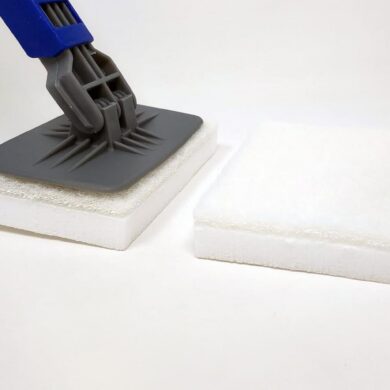
For floor cleaning, select a pad designed for the floor finish and equipment being used. Handheld scrub pads and machine pads are not interchangeable.

When reviewing melamine floor cleaning pads, confirm the pad dimensions, attachment method, equipment requirements, and approved flooring applications. Test before expanding to a larger area.

Surface Compatibility Comes Before Cleaning Power

A tool that removes a mark but leaves a visible patch has not delivered a successful result.

Before introducing a new sponge or pad:

  1. Identify the surface material and its coating or finish.
  2. Review the surface manufacturer’s care instructions.
  3. Check the cleaning tool’s directions and restrictions.
  4. Test an inconspicuous area using the recommended method.
  5. Let the area dry and inspect it for scratches, dulling, or color changes.
  6. Document approved uses for your staff.

Use particular caution with glossy finishes, painted surfaces, polished materials, and coatings. A successful test on one fixture does not establish compatibility with every similar-looking surface in the building.

Compare Cost Per Use, Not Just Price Per Sponge

Unit price helps compare pack sizes, but it does not capture the full cost of a cleaning task. Labor, product consumption, cleaning solution, and repeat work all matter.

Use this simple calculation:

Cost per completed task = tool cost consumed + cleaning-solution cost + labor cost

For example, assume a cleaning task consumes $0.50 in supplies and takes three minutes at a labor cost of $24 per hour:

  • Supplies: $0.50
  • Labor: $1.20
  • Total cost per task: $1.70

If another approved method uses $0.80 in supplies but takes two minutes, its total is $1.60.

These are illustrative figures, not measured results or a savings claim for either material. The point is to test the complete method rather than automatically selecting the lowest-priced pad.

To make a useful comparison, have staff clean similar areas with comparable soil levels. Record time, product usage, and the finished result. Include any required rinsing or cleanup in the timing.

Durability and Replacement: Measure What Your Team Uses

There is no universal number of jobs that a sponge or pad will last.

Rough surfaces may consume melamine foam more quickly. Scrub pads can retain debris or become unsuitable for reuse before they wear out. Hygiene requirements may also determine replacement timing.

Track consumption over a representative week or cleaning cycle. Record which tasks use the most supplies and whether staff are applying unnecessary pressure or using the wrong tool.

Once you know your usage, compare bulk cleaning supply options and choose quantities that fit your workload and storage capacity.

Cleaning Is Not the Same as Disinfecting

Removing visible dirt with a sponge or pad does not establish that a surface has been disinfected.

Where disinfection is required, follow your facility’s approved procedure and the disinfectant label, including any precleaning, contact-time, and rinsing requirements. Do not assume that a water-only cleaning method replaces those steps.

Likewise, avoid treating either material as automatically more sustainable. Consider actual product consumption, reusable-tool care, cleaning-solution use, packaging, and disposal when evaluating your process.

Stock a Practical Mix of Janitorial Supplies

Most facilities have several cleaning tasks and surface types, so a small selection of clearly assigned tools is often more useful than relying on one pad for everything.

Start with:

  • Melamine erasers for approved spot-cleaning applications.
  • Non-scratch pads for compatible routine scrubbing tasks.
  • Heavy-duty pads reserved for surfaces that tolerate stronger abrasion.
  • Appropriate wiping cloths and floor tools to complete the job.

Keep a short reference sheet showing which products are approved for each area. This helps new staff choose correctly and makes replenishment easier to manage.

Explore Sponge Outlet’s commercial janitorial supplies to build an assortment around your facility’s cleaning tasks, or contact our team with questions about product options.

Posted on

Emergency Cleanup Tips: Fast Response to Spills, Marker Accidents, and Unexpected Messes

cleaning person

Every busy space eventually faces an unexpected mess. A drink tips over in a classroom. A permanent marker ends up on a wall. A toddler drops a snack on the floor. A coffee cup spills across an office desk. These moments feel stressful, but they do not have to turn into lasting damage. With the right approach and the right tools, most accidents can be handled quickly and easily.

For janitors, facility teams, teachers, daycare staff, and parents, fast response cleaning is one of the best habits to develop. Acting quickly prevents stains from setting, protects surfaces, and keeps spaces looking cared for. One tool that has become a favorite for emergency cleanup is the Instant Erase magic sponge from Sponge Outlet. It works quickly, needs only water in most situations, and handles many of the most common messes found in schools, offices, and homes.

This guide walks through how to respond to spills and stains, how to handle different surfaces, and why melamine foam sponges are an essential part of any quick cleanup routine.

eraser sponges for cleaning services and companies

Why Quick Action Makes All the Difference

Most spills and stains are easiest to remove in the first few minutes. Liquids soak in over time. Marker ink bonds with paint. Sticky foods attract dirt and become harder to scrub. When staff or parents respond right away, cleanup is faster and surfaces stay in better condition.

Fast response cleaning helps:

  • Prevent permanent stains
  • Reduce repainting and repair costs
  • Keep environments sanitary
  • Maintain a professional appearance
  • Minimize disruption to daily activities

A prepared team with a simple plan can handle accidents calmly instead of reacting in panic.

Setting Up an Emergency Cleanup Station

One of the easiest ways to improve response time is to keep supplies ready. Instead of hunting for tools after an accident, build small cleanup stations throughout your building or home.

A simple kit includes:

  • Instant Erase melamine foam sponges
  • Microfiber cloths
  • Paper towels
  • A small spray bottle of water
  • Disposable gloves
  • A mild all-purpose cleaner

These kits can be stored in janitorial closets, classrooms, breakrooms, or even a kitchen drawer at home. The goal is convenience. When tools are nearby, messes get handled faster.

Handling Drink and Liquid Spills

Spilled juice, soda, coffee, and water are everyday accidents. The key is to remove liquid quickly and deal with residue before it dries.

Start by blotting the spill with paper towels. Blotting lifts the liquid instead of spreading it. Once most of the moisture is gone, wipe the area with a damp microfiber cloth. This removes leftover liquid and prepares the surface for final touch cleaning.

If a sticky spot, stain, or ring remains, lightly dampen an Instant Erase sponge and gently rub the area. The melamine foam lifts leftover residue that a standard cloth often leaves behind. Finish by drying the surface with a clean cloth.

This method works well on desks, tables, countertops, painted walls, and laminate flooring.

Removing Marker, Pen, and Crayon Marks

Art accidents happen fast, especially around children. Marker lines on walls, pen marks on desks, and crayon on furniture are common problems in schools and homes.

The most important step is acting quickly. Fresh ink and wax are much easier to remove than stains that have had time to settle.

Lightly wet a melamine sponge and squeeze out extra water. Gently rub the marked area using light pressure. The sponge will begin lifting the pigment from the surface. Wipe the area with a microfiber cloth to remove any leftover residue. Repeat if needed until the surface looks clean.

Always test in a small hidden area first, especially on glossy paint or delicate plastic. When used correctly, melamine foam removes marks without harsh chemicals or strong odors.

Tackling Food and Sticky Residue

Lunchrooms, breakrooms, and kitchens are high traffic zones for spills and sticky messes. Syrup, sauces, candy, and greasy fingerprints can leave surfaces looking dirty even after a quick wipe.

Begin by removing any solid food with a paper towel. Then wipe the surface with a damp cloth to loosen residue. If stickiness or staining remains, a damp melamine sponge will break through the buildup quickly. Follow up with a clean cloth to dry the area.

In food prep spaces, finish with a food safe sanitizer after cleaning to meet hygiene requirements.

Cleaning Toys and Activity Equipment

In daycares and homes with children, toys and activity stations often need fast attention. Paint, marker, food, and grime collect on plastic surfaces every day.

Rinse toys, when possible, to remove loose debris. Use a damp melamine sponge to gently wipe hard plastic and sealed surfaces. Rinse again and allow the item to dry completely. This keeps toys looking clean and ready for use without relying on strong cleaners.

Removing Scuffs from Walls and Floors

Scuff marks from shoes, carts, and furniture show up quickly in busy spaces. Hallways, entryways, and classrooms are especially prone to these marks.

A damp Instant Erase sponge can usually erase scuffs within seconds. Light pressure is enough. Finish by wiping with a microfiber cloth to remove dust. This simple step keeps walls and floors looking freshly maintained and reduces the need for frequent repainting.

Why Instant Erase Sponges Are a Smart Emergency Tool

Emergency cleanup works best when tools are simple and reliable. Instant Erase sponges are designed for fast action without complicated steps.

They:

  • Work with water in most situations
  • Remove tough marks quickly
  • Reduce the need for chemical cleaners
  • Are safe on many common surfaces
  • Are affordable in bulk for facilities
  • Store easily in multiple locations

For janitorial teams and facility managers, bulk ordering makes it easy to keep sponges available across an entire building. For parents, a small supply under the sink can handle everyday accidents without stress.

Teaching Staff and Family Members Simple Cleanup Habits

Even the best tools are only effective when people know how to use them. A few simple habits can make emergency cleanup second nature.

Encourage everyone to:

  • Act quickly when a mess happens
  • Blot spills before wiping
  • Use light pressure with melamine sponges
  • Test delicate surfaces first
  • Return supplies to the cleanup station after use

These small practices save time, protect surfaces, and keep environments cleaner overall.

Staying Ready for Life’s Little Accidents

Spills, stains, and messes are part of everyday life in schools, offices, and homes. The difference between a quick fix and a lasting stain is preparation and the right tools. With a simple cleanup plan and Instant Erase melamine foam sponges within reach, most accidents become easy to handle.

Being ready for the unexpected keeps spaces cleaner, protects your surfaces, and makes daily life a little less stressful for everyone involved. Contact Sponge Outlet at 877-776-6430 today or visit us online for more information!

Posted on

Cutting Down on Chemicals: How Eraser Sponges Reduce Cleaner Costs

Melamine Foam Eraser Sponges from Sponge Outlet

For cleaning companies, every expense matters. Between payroll, supplies, and transportation, small savings can add up to a big difference by the end of the year. One of the easiest ways to reduce recurring costs is to cut down on chemical cleaners without sacrificing results. That’s where Instant Erase magic sponge erasers come in.

These sponges, made from high-quality Basotect® melamine foam, clean effectively with just water. No sprays, no solvents, no harsh odors. For professional cleaning businesses, this simple shift has major benefits in cost, safety, and sustainability.

The Science Behind a Chemical-Free Clean

Melamine foam might look basic, but its structure is powerful. When dampened, the foam works like a micro-fine abrasive, gently lifting away stains, dirt, and scuff marks. It penetrates surface pores that traditional cloths and mops can’t reach. Because it uses physical action instead of chemical breakdown, the sponge doesn’t rely on soap or detergent to do the heavy lifting.

The result is a cleaner surface with fewer products involved. All it takes is a little water and light pressure. For cleaning companies, that means less product inventory, simpler training, and fewer worries about surface compatibility or lingering residues.

How Reducing Chemicals Saves Money

Every gallon of cleaning solution adds up, both in purchase price and in everything that comes with it. Bottles, storage space, safety labels, and proper disposal all cost time and money. When your crew can tackle more jobs with Instant Erase sponges, you immediately lower that overhead.

Think about it this way:

Lower supply costs. Eraser sponges replace multiple specialty cleaners. They handle walls, doors, tiles, and even office furniture.

Less waste. You no longer have to throw out half-used chemical bottles or expired containers.

Smaller storage footprint. Boxes of sponges take up far less room than gallons of cleaning liquids.

When you multiply these savings across multiple job sites or large teams, the financial impact becomes significant. You get the same spotless results for a fraction of the cost.

A Safer, Simpler Work Environment

Reducing chemical use isn’t just good for your budget; it’s also better for your team. Many common cleaning products contain harsh ingredients that require gloves, masks, and other personal protective equipment. Using fewer chemicals helps lower PPE expenses and reduces exposure risks.

With Instant Eraser sponges, your crew can clean most surfaces using only water. That means fewer skin irritations, no strong fumes, and a safer workday overall. Training new staff also becomes simpler because there are fewer handling procedures or warning labels to explain.

This change can even reduce your company’s liability. Fewer chemicals on hand mean fewer chances for spills, mix-ups, or accidents, which keeps your insurance and compliance costs in check.

Faster and More Efficient Cleaning

Speed matters in the cleaning business. When your team can move from task to task without switching bottles or mixing solutions, jobs get done faster. Instant Erase sponges are versatile enough to handle a wide variety of surfaces, including:

  • Painted walls and baseboards
  • Light switches and door frames
  • Restroom partitions and tiles
  • Breakroom counters and appliances
  • Elevator interiors and trim

With a single tool that works in all these areas, your team can save time and focus on delivering consistent results. Less clutter in the cleaning cart also makes transportation between sites easier.

Meeting the Demand for Green Cleaning

Today’s clients care about sustainability. Many property managers, schools, and corporations prefer service providers that use environmentally friendly methods. Using a chemical-free cleaning tool like Instant Erase is an easy way to strengthen your “green” credentials without changing your entire process.

These sponges naturally support eco-friendly goals by:

  • Reducing chemical runoff into water systems
  • Eliminating plastic waste from empty cleaning bottles
  • Cutting down on packaging and transport emissions through bulk ordering

When you can promote your cleaning services as safe, effective, and environmentally responsible, you stand out to clients who want their facilities cleaned responsibly.

Results That Speak for Themselves

The biggest question many cleaners have is whether chemical-free cleaning can truly compete with traditional products. In most cases, the answer is yes. Instant Erase sponges remove marks and buildup that even strong sprays can’t handle. They’re especially effective for tough stains like crayon, shoe scuffs, or ink on hard surfaces.

For cleaning professionals, that means better first-pass results and fewer return trips to fix problem areas. The foam’s texture and density create a deep clean without residue, leaving behind smooth, spotless surfaces your clients will notice right away.

The Smart Choice for Cleaning Companies

Sponge Outlet’s Instant Erase line uses the same Basotect® melamine foam found in the well-known Mr. Clean® Magic Eraser®, but at a much lower cost. Because Sponge Outlet sells directly in bulk, cleaning companies can save up to 80% per sponge while getting identical performance.

You can order in quantities that suit your operation, from small teams to large janitorial services, with free shipping available across the continental U.S. Once you start using Instant Erase regularly, it becomes easy to standardize across your crews and simplify your entire inventory.

If you want to clean smarter, not harder, make Instant Eraser sponges part of your regular routine. Contact Sponge Outlet at 877-776-6430 today or visit us online for more information!