
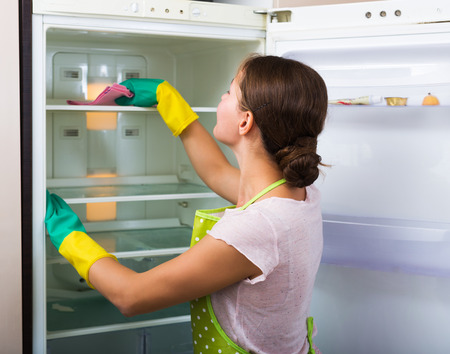
The best way to clean kitchen appliances is to match the cleaning method to the appliance and its finish. Start with a clean, soft cloth and the cleaner recommended in the owner’s manual. Loosen dried spills before wiping, keep water away from electrical components, and dry surfaces before putting the appliance back into use.
Whether you are cleaning your own kitchen, preparing a rental for new guests, or stocking a professional cleaning cart, a few well-chosen supplies can cover many everyday jobs. This guide walks through refrigerators, microwaves, ovens and smaller appliances, with tips for choosing the right sponge or cloth along the way.
Choose your kitchen appliance cleaning supplies
Keep separate tools for washing, drying and spot cleaning. A cloth used on the floor should never be the one you reach for inside the refrigerator.
- Microfiber cleaning towels are useful for everyday wiping and drying. Keep a fresh towel ready for the final pass over appliance exteriors.
- Swedish dishcloths offer a reusable option for absorbing ordinary spills and wiping washable surfaces.
- Instant Erase Non-Scratch Scrub Sponges combine a cellulose sponge with a scrubbing side. Use only where the appliance’s care instructions permit a scrub sponge, and test first.
- A soft brush can help with removable filters and small crevices when the manufacturer recommends it.
Have mild dish soap or an appliance-approved cleaner available. More cleaner or a rougher pad is not always the answer to a stubborn mark. Giving residue time to soften can reduce the amount of scrubbing needed.
Check the finish before you scrub
Stainless steel, painted metal, glass and plastic can require different care. Fingerprint-resistant finishes and touchscreens may have coatings that ordinary scrubbing can damage. Check the manual, test a hidden area and inspect your cloth for grit before starting.
Melamine eraser sponges clean through fine abrasion. That makes them useful for certain marks on compatible hard surfaces, but unsuitable as an all-purpose appliance scrubber. Keep them off stainless steel appliance finishes, glossy coatings, nonstick surfaces and electronic displays unless the manufacturer specifically permits them. A successful spot test does not override the care instructions.
Let heated appliances cool and unplug portable electrical appliances before cleaning them. Apply cleaning liquid to the cloth rather than spraying controls, vents or electrical openings. Never immerse a motor base, cord or plug.
How to clean a refrigerator and freezer
Plan the job before emptying the refrigerator so perishable food can stay cold in another refrigerator or a cooler with ice packs. Follow the manual’s instructions for switching off cooling or disconnecting power during a deep clean.
- Remove food and take out the shelves and drawers designed to be removable. Let cold glass shelves warm to room temperature before washing them.
- Hand-wash removable parts with mild dish soap and warm water, using a soft cloth or suitable sponge. Do not assume that refrigerator parts are dishwasher-safe.
- Wipe the interior and door seals, paying attention to crumbs and sticky residue in the folds. Keep excess water out of vents and seams.
- Wipe away soap residue and dry the surfaces. Reinstall the parts, restore cooling and return food promptly.
Whirlpool’s refrigerator care guidance explains these precautions in more detail. For a freezer that needs defrosting, use the procedure for your model rather than chipping at ice with a sharp tool.
Treat the ice maker as a separate maintenance task. Its ice bin, water filter and internal cleaning cycle may each have different instructions. Replace filters on the manufacturer’s schedule rather than attempting to wash a disposable filter.
How to clean a microwave
Once the microwave is cool, remove loose crumbs and take out the turntable if the manual allows it. Wash the turntable using its approved method, taking care not to expose hot glass to cold water.
Wipe the interior with a soft cloth and a mild cleaning solution permitted by the manufacturer. For dried splashes, hold a warm, damp cloth against the residue before wiping it away. Avoid flooding the interior, scrubbing protective covers or pushing moisture into openings.
Clean the door edges and exterior, remove cleaning residue and dry with a fresh cloth. Follow your model’s directions if you use a steam-cleaning method; hot water and steam can burn. Whirlpool’s microwave cleaning guide provides additional guidance on interiors, turntables and exteriors.
How to clean an oven and stovetop
Check the oven’s cleaning instructions before choosing a product. Conventional, self-cleaning and steam-cleaning ovens do not all tolerate the same treatments. A cleaner intended for one oven may be unsuitable for another.
When the oven is cool, remove loose food and clean removable racks as directed. Use the approved cleaning method for the interior and door glass. Do not scrub heating elements or the door gasket, and do not combine an oven cleaner with a self-cleaning cycle unless the instructions explicitly allow it. See Whirlpool’s oven cleaning guidance for an overview of the different methods.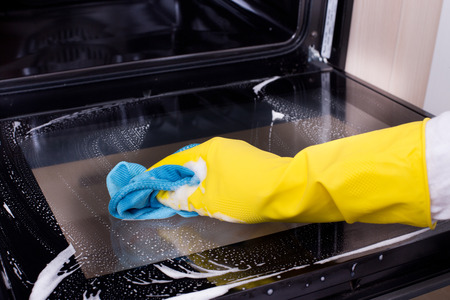
For the stovetop, identify the surface before tackling cooked-on residue:
- On glass or ceramic cooktops, use the cleaner and cleaning pad specified for that surface. Use a scraper only if the manufacturer permits it and follow its directions.
- On gas cooktops, remove grates and burner components only as instructed. Clean and dry removable pieces thoroughly before reassembly.
- On electric coil models, keep electrical connections dry and follow the manual for drip pans and removable components.
A scrub sponge belongs only on surfaces approved for that type of tool. Its color or “non-scratch” name does not establish compatibility with every appliance finish.
How to clean a dishwasher
Empty the dishwasher and check the bottom for visible food debris. If your model has a user-removable filter, take it out and clean it according to the manual. Some filters are not designed to be removed by the user.
Wipe accessible door edges and seals with a soft, damp cloth. Then use a dishwasher cleaning product and cycle approved for your machine. Do not add hand dishwashing liquid to a dishwasher cycle or substitute an improvised cleaning mixture without checking the instructions. Whirlpool’s dishwasher guide covers filter checks and cleaning cycles.
Finish by wiping the handle and exterior with a separate cloth. If the dishwasher continues to smell or drain poorly after routine cleaning, investigate the cause rather than repeatedly adding cleaner.
How to clean stainless steel appliance exteriors
Begin with a clean microfiber cloth and the cleaning method approved for the finish. Wipe along the grain of the steel, then dry with a second clean cloth to remove remaining moisture and streaks.
Avoid steel wool, abrasive pads and harsh cleaners. Coated or fingerprint-resistant stainless steel may require different care from uncoated steel, so check before applying polish. Whirlpool’s stainless steel care guide explains how to identify the grain and choose a suitable cleaner.
Remember coffee makers and small appliances
Small appliances need attention wherever food, grease or crumbs collect. Unplug them and let them cool before handling removable parts.
For a coffee maker, wash the carafe and other removable components according to the manual. Descaling is a separate process for mineral buildup; use the recommended solution, cycle and rinse procedure rather than a universal vinegar recipe.
For blenders and mixers, clean detachable parts as directed and keep fingers away from sharp blades. Wipe the motor housing with a barely damp cloth. Only place parts in the dishwasher when the manufacturer identifies them as dishwasher-safe.
For a toaster, empty the removable crumb tray as instructed and let any washed parts dry fully before reassembly. Keep water and cleaning tools out of the heating slots. Air fryers and toaster ovens also need model-specific care, especially around nonstick baskets, heating elements and fans.
Make appliance cleaning easier to maintain
Use a short checklist based on how heavily the kitchen is used. Deal with spills once surfaces are safe to handle, inspect refrigerator shelves and microwave interiors regularly, and schedule deeper cleaning according to the manuals. A busy shared kitchen may need attention more often than a lightly used home kitchen.
For cleaning teams, assign separate cloths to appliance interiors, exteriors and other areas. Keep a clean supply available while used cloths are being washed, and replace worn sponges. Our house cleaning and maid supplies page can help you plan supplies for recurring work.
Kitchen appliance cleaning questions
Can I use an eraser sponge on every appliance?
No. Melamine foam is abrasive, even when it feels soft. Follow the appliance manufacturer’s instructions and reserve eraser sponges for compatible surfaces. Start with a soft cloth for delicate finishes.
Does a cleaning sponge disinfect a kitchen appliance?
An ordinary sponge or cloth is a cleaning tool, not a disinfectant. If sanitizing or disinfecting is required, use a suitable labeled product and follow its directions, including any food-contact rinsing requirements.
What should I buy for routine appliance cleaning?
Start with microfiber towels, an absorbent cloth for spills and a suitable sponge for washable removable parts. Add specialized tools only when the appliance calls for them. Compare Sponge Outlet cleaning products to choose supplies for the jobs you do most often.